Most NGO jobs in Uganda are posted first on the organisation's own careers page. Here is where to look, how to verify adverts and how to get shortlisted.
NGO jobs in Uganda are some of the most wanted vacancies in the country. They offer structured work, training, exposure to international systems and, in many cases, a clear career ladder. That is exactly why they are so hard to get. One programme officer advert in Kampala can attract hundreds of applicants, and many of them never hear back.
The problem is rarely that good candidates are missing. Most people simply look in the wrong places, apply too late, send a general CV, or fall for fake “UN” and “NGO” adverts that ask for money. Others never realise that UN agencies, international NGOs, local NGOs and community-based organisations all recruit in different ways.
This guide shows you how to find NGO jobs in Uganda the smart way. You will learn which types of organisations hire, where their vacancies are published first, how UN jobs for Ugandan nationals work, how to check that an organisation is real, and how to build an application that survives screening. It is written for fresh graduates, field staff wanting their first NGO contract, and professionals moving from the private or public sector into NGO careers in Uganda.
Table of Contents
How Do You Find NGO Jobs in Uganda?
Quick answer: To find NGO jobs in Uganda, check the careers pages of organisations you want to join, ReliefWeb, UN agency portals and verified job boards such as NextRoleHub every week. Trace every advert back to the organisation’s official website, apply early with a CV tailored to the job description, and never pay any fee to apply.
That is the short version. The rest of this guide explains each part in detail, so you know where to look first, how to judge an advert, and what NGO recruiters actually screen for.
Types of NGO Employers in Uganda
“NGO job” is a wide label. Before you search, understand who you are applying to, because each group advertises and recruits differently.
| Employer type | Examples of work | How they usually recruit |
|---|---|---|
| UN agencies | Programme, health, refugees, migration, logistics, data | Own online portals; national posts for Ugandans, international posts for others |
| International NGOs (INGOs) | Humanitarian response, education, WASH, livelihoods, protection, MEAL | Careers portals or ATS, plus job boards and ReliefWeb |
| National NGOs | Community programmes, advocacy, health, legal aid | Email applications, own websites, job boards, newspapers |
| Community-based organisations (CBOs) | Local projects, volunteers, outreach | Notice boards, local networks, referrals, social media |
| Foundations and research bodies | Grants, research, evaluation, policy | Own websites, LinkedIn, specialist boards |
In Uganda, NGOs are regulated by the National Bureau for NGOs under the Ministry of Internal Affairs. Under the NGO Act 2016, an organisation needs a valid permit from the Bureau to operate. UN agencies are not registered as NGOs; they work under agreements with the government and run their own recruitment systems.
Common NGO roles in Uganda
- Programme and project roles: project officer, programme assistant, coordinator, manager.
- MEAL / M&E: data assistant, MEAL officer, research assistant, enumerator.
- Field and community roles: community mobiliser, field assistant, case worker, extension worker.
- Support functions: finance, procurement, HR, admin, logistics, drivers, IT.
- Specialist roles: protection, GBV, WASH engineering, health, nutrition, education, communications, grants.
Support functions are an under-used entry point. An accountant or procurement assistant from the private sector can often move into an NGO faster than someone waiting for a programme role.
Where to Find NGO Jobs in Uganda
The best NGO vacancies usually appear first on the organisation’s own careers page. Everything else, including job boards, WhatsApp groups and newspapers, is a copy. Use the sources below together, not one at a time.
The main sources, ranked by how you should use them
- Organisation careers pages. The original source. Many INGOs post Uganda roles on global portals where you filter by country.
- ReliefWeb. Run by UN OCHA and widely used by international NGOs and some UN agencies for humanitarian and development jobs. Filter by country “Uganda”.
- UN agency portals. The UN Careers portal covers the UN Secretariat. Specialised agencies such as UNICEF, WHO, UNHCR and WFP use their own careers sites, and UNDP Uganda lists its vacancies on its own jobs page.
- Verified local job boards. NextRoleHub keeps a live NGO jobs in Uganda page where each listing is checked, shows its real deadline and is removed when it closes.
- LinkedIn. Follow target organisations and their country directors, and set a job alert for “Uganda” plus your function.
- Global aggregators. Devex, Impactpool and UNjobs collect NGO and UN vacancies. Useful for mid-level and international roles.
- Newspapers and district notice boards. Some national NGOs and district-based projects still advertise in print or locally.
For a wider comparison of job platforms, see our guide to the best job websites in Uganda.
Build a target list of 20 organisations
Pick 20 organisations that work in your field and region. A WASH engineer in West Nile and a finance graduate in Kampala should have very different lists. Bookmark each careers page and check them every Monday and Thursday.
Recent NGO adverts on NextRoleHub have come from organisations such as Catholic Relief Services, the International Rescue Committee, the Danish Refugee Council, Plan International, WaterAid, SNV, IOM and One Acre Fund. They show the range: refugee response in Yumbe and Isingiro, agriculture in Teso and Jinja, and head-office roles in Kampala.
See what is open right now. Every NGO vacancy on NextRoleHub is checked, free to apply and shows its real closing date.
Step-by-Step: How to Get an NGO Job in Uganda
Use this sequence for every NGO vacancy. It turns random searching into a routine that produces interviews.
- Choose your lane. Decide on one or two functions (for example MEAL and programme support) and one or two sectors (for example health and refugees). NGOs hire specialists, not “anything” candidates.
- Map your evidence. List your degree, internships, research projects, volunteering and software skills. These are your proof points.
- Set alerts. Create alerts on ReliefWeb, LinkedIn and NextRoleHub, and register on the portals of your top UN agencies and INGOs.
- Read the advert or terms of reference twice. Note every required qualification, skill, location and document.
- Verify the organisation. Confirm the vacancy on the official website and check the email domain. More on this below.
- Tailor your CV and letter. Match the advert’s keywords and show one result for each key requirement.
- Apply early through the stated channel. Portal, email or physical delivery: use exactly what the advert says, before the deadline.
- Prepare for tests. Many NGOs use a written test, a practical task or a panel interview before shortlisting.
- Track and follow up. Keep a simple sheet: organisation, role, date applied, deadline, outcome.
Our full guide on how to apply for jobs in Uganda and actually get responses goes deeper into timing, email subject lines and follow-ups.
UN Jobs in Uganda: How National Posts Work
Many Ugandans skip UN jobs because they assume they are only for foreigners. That is wrong. A large share of UN staff in a country office are locally recruited nationals.
| UN category | Who can apply | What it involves |
|---|---|---|
| General Service (G/GS) | Locally recruited, usually nationals or legal residents | Administrative, finance, logistics, programme support, drivers |
| National Officer (NO) | Nationals of the country of the duty station | Technical and professional work with strong local knowledge |
| International Professional (P) | Open internationally; staff usually serve outside their home country | Analytical, managerial and specialist work |
| National UN Volunteer | Ugandan citizens (and some legally resident refugees) | Volunteer assignments with a living allowance |
UNICEF, for example, says National Officers normally need an advanced university degree, and its NO levels rise from about one year of relevant experience at NO-A to ten years at NO-E. Check the exact requirement in each vacancy, because agencies set their own rules.
The UN Volunteers programme is a practical entry route. UNV advertises assignments on its Unified Volunteering Platform, applicants register in its Global Talent Pool, and UNV and UNESCO materials put the minimum age for national UN Volunteers at 22. National UN Volunteers receive a living allowance that varies by location.
Tip: UN portals reward complete profiles. Fill every section of your online profile once, carefully, then reuse it. A half-finished profile on a UN system is often screened out before anyone reads it.
How to Check an NGO Job Is Real
Fake NGO and UN job offers are common in Uganda because the brands are trusted. Scammers copy logos, create look-alike email addresses and ask for “processing”, “training” or “medical” fees, often by mobile money.

- Find it on the official website. If the vacancy is not on the organisation’s own careers page or portal, treat it as unconfirmed.
- Check the email domain. A real international NGO rarely recruits from a free Gmail or Yahoo address.
- Search the NGO Bureau register. The National Bureau for NGOs publishes a National NGO Register. The copy online may be older, so a new organisation might be missing; ask for registration details if you cannot find it.
- Never pay. UNICEF states it does not charge fees at any stage of recruitment and does not ask for banking information. Treat any fee request as a scam.
- Be wary of instant offers. Genuine NGOs shortlist, test and interview. An offer without any assessment is a red flag.
If you suspect fraud, report it to the police and tell the organisation being impersonated through the contacts on its official website.
How to Write an NGO Application That Gets Shortlisted
NGO recruiters screen against a checklist. If the advert lists six requirements, your CV and letter should make all six easy to tick in seconds.
Match each requirement with evidence
Make a two-column note: the requirement on the left, your proof on the right. For a data assistant role, your proof could be the household survey you ran for your final-year research. For a finance assistant role, it could be bookkeeping during industrial training.
Example
Requirement: “Experience collecting and entering field data.” Evidence: “For my final-year research in Wakiso, I interviewed 120 households with a structured questionnaire, entered the data in KoboToolbox and cleaned it in Excel before analysis.”
Use the advert’s language
Large NGOs often use applicant tracking systems that rank CVs by keywords. If the advert says “MEAL”, “safeguarding” or “community engagement”, use those exact words where they are true. Our guide on how to beat ATS in Uganda explains the formatting that systems can read.
Write a letter for this organisation only
Name the role, the organisation and one specific programme it runs. Show why your evidence fits that programme. Keep it to one page. Our step-by-step guide on how to write an application letter in Uganda includes a structure that works well for NGO adverts.
Prepare for the panel
NGO interviews are usually competency-based. Expect “Tell us about a time you…” questions on teamwork, pressure, community conflict and safeguarding. Answer with a short situation, what you did and the result. Practise with our Uganda interview questions tool.
No NGO experience yet? Internships, graduate trainee posts and volunteer roles are often the fastest way in.
Target field roles and regional NGO employers
Uganda hosts one of the largest refugee populations in Africa, so a big share of NGO hiring happens outside Kampala. Districts such as Yumbe, Adjumani, Isingiro, Kikuube, Kyegegwa and Arua regularly appear in humanitarian adverts for protection, case management, WASH, education and livelihoods roles.
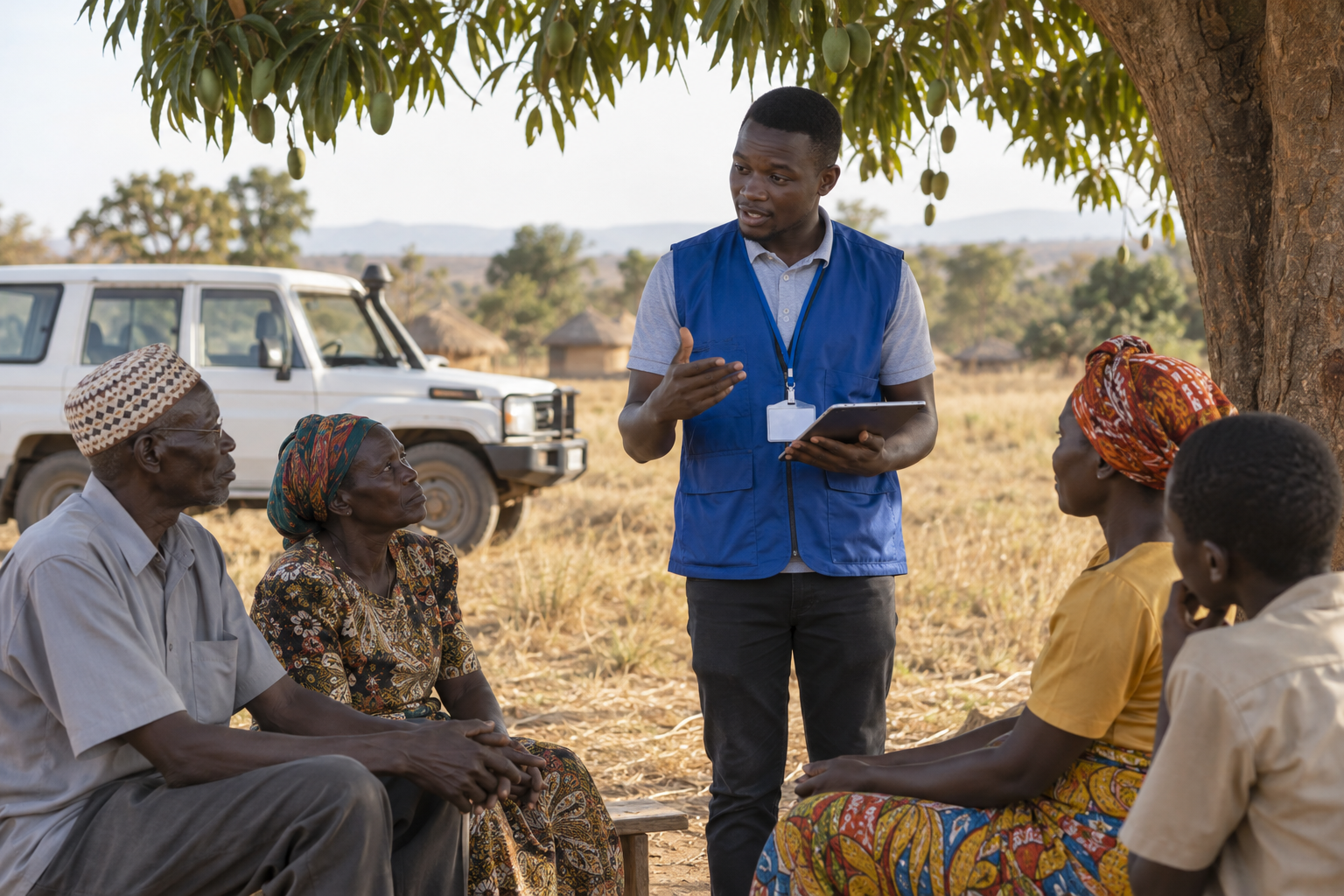
- Field roles favour local knowledge. Speaking the language of the area, such as Lugbara, Madi, Runyankole or Ateso, is often listed as an advantage.
- Contracts are often project-based. Many NGO posts end when donor funding ends. Read the contract length before you resign from a permanent job.
- Labour law still applies. The NGO Act requires organisations to follow Ugandan labour law, so expect NSSF and PAYE deductions and written employment terms.
- Graduate schemes exist. The Ministry of Gender, Labour and Social Development runs the Uganda Graduate Volunteer Scheme and the National Apprenticeship Programme, which can place graduates with civil society and other host organisations.
NGO salaries vary widely by organisation, donor budget, grade and location, and most adverts do not publish pay. Do not trust salary figures circulating on social media; ask about the grade and package at offer stage.
Build relevant NGO evidence before applying
- Learn one data tool well. KoboToolbox, ODK, Excel pivot tables or Power BI make you useful to almost any programme team.
- Volunteer with a purpose. Choose placements that give you tasks you can name on a CV, and ask for a reference at the end.
- Read the organisation’s strategy. Two minutes on its Uganda programmes page gives you a strong “why us” answer.
- Apply in the first few days. Some NGOs review applications on a rolling basis and close early.
- Keep a ready folder. Scanned certificates, transcripts, ID and referee contacts in one PDF save hours when a deadline is close.
- Be willing to move. A first contract in a field location is often the shortest route to a Kampala role later.
Verify vacancies and tailor each application
| Mistake | Why it happens | Solution |
|---|---|---|
| Sending one CV to every NGO | It feels faster | Tailor your profile and examples to each advert’s requirements |
| Applying from WhatsApp screenshots | Forwards look official | Confirm every vacancy on the organisation’s website first |
| Paying “processing” fees | Desperation and urgency | Never pay; genuine NGOs and UN agencies do not charge |
| Ignoring field locations | Preference for Kampala | Consider district and settlement-based roles to gain experience |
| Leaving out required documents | Rushing at the deadline | Use a checklist; many NGOs disqualify incomplete applications |
| Weak or unaware referees | Picking names at the last minute | Choose supervisors who know your work and warn them in advance |
Frequently Asked Questions
Where can I find genuine NGO jobs in Uganda?
Start with the careers pages of the organisations you want to join, because they publish first. Then use ReliefWeb, UN agency portals, LinkedIn and verified local boards such as the NextRoleHub NGO jobs page, which checks each listing and removes it when it closes. Always confirm a vacancy on the organisation’s own website before applying.
Can a fresh graduate get an NGO job in Uganda?
Yes, but usually through entry routes such as internships, field or data assistant roles, graduate trainee posts, national UN Volunteer assignments and the Uganda Graduate Volunteer Scheme. Use your research project, industrial training and volunteering as evidence. Apply widely within one or two functions rather than for any role you see.
Do Ugandans qualify for UN jobs?
Yes. UN country offices recruit Ugandan nationals into General Service and National Officer posts, and Ugandan citizens can apply for national UN Volunteer assignments. International Professional posts are open globally, but staff usually serve outside their home country. Each vacancy states who is eligible, so read that section before applying.
Do NGOs or UN agencies charge application fees?
No genuine NGO or UN agency should ask you to pay to apply, be interviewed, trained or placed. UNICEF says it does not charge any fee at any stage of recruitment and does not ask for banking details. Any request for money, especially by mobile money, is a strong sign of a scam.
How can I check if an NGO is registered in Uganda?
Look it up on the National NGO Register published by the National Bureau for NGOs, and confirm its physical office and official website. The online register may not include the newest organisations, so if you cannot find it, ask the organisation for its registration details before you share documents or personal information.
What qualifications do NGO jobs in Uganda require?
It depends on the role. Field and support roles may ask for a diploma or degree and some practical exposure, while officer and manager roles ask for a relevant degree plus years of experience. UN National Officer posts normally need an advanced degree. The advert or terms of reference always lists the minimum, so match it exactly.
Are NGO jobs in Uganda permanent?
Many are fixed-term and tied to project funding, so a contract may end when a grant ends, even if your performance is good. Some larger organisations offer longer-term core posts. Before accepting, read the contract length, renewal terms, duty station and benefits, and check that NSSF and PAYE are handled under Ugandan law.
How long does NGO recruitment take?
It varies. Urgent humanitarian roles can move in a few weeks, while UN and large INGO processes often take longer because they include written tests, panel interviews, reference checks and approvals. Many organisations only contact shortlisted candidates, so keep applying elsewhere while you wait rather than holding out for one response.
Find roles through official sources and apply early
Finding NGO jobs in Uganda is less about luck and more about routine. Know which type of organisation you are targeting, watch their official careers pages and verified boards every week, and confirm every advert before you invest time in it.
When you apply, match each requirement with real evidence, use the advert’s language, and submit early through the stated channel. Never pay to apply. If you are new, use internships, volunteering and field roles to build the proof that NGO recruiters want.
Ready to apply? Browse every verified vacancy in Uganda, updated daily.